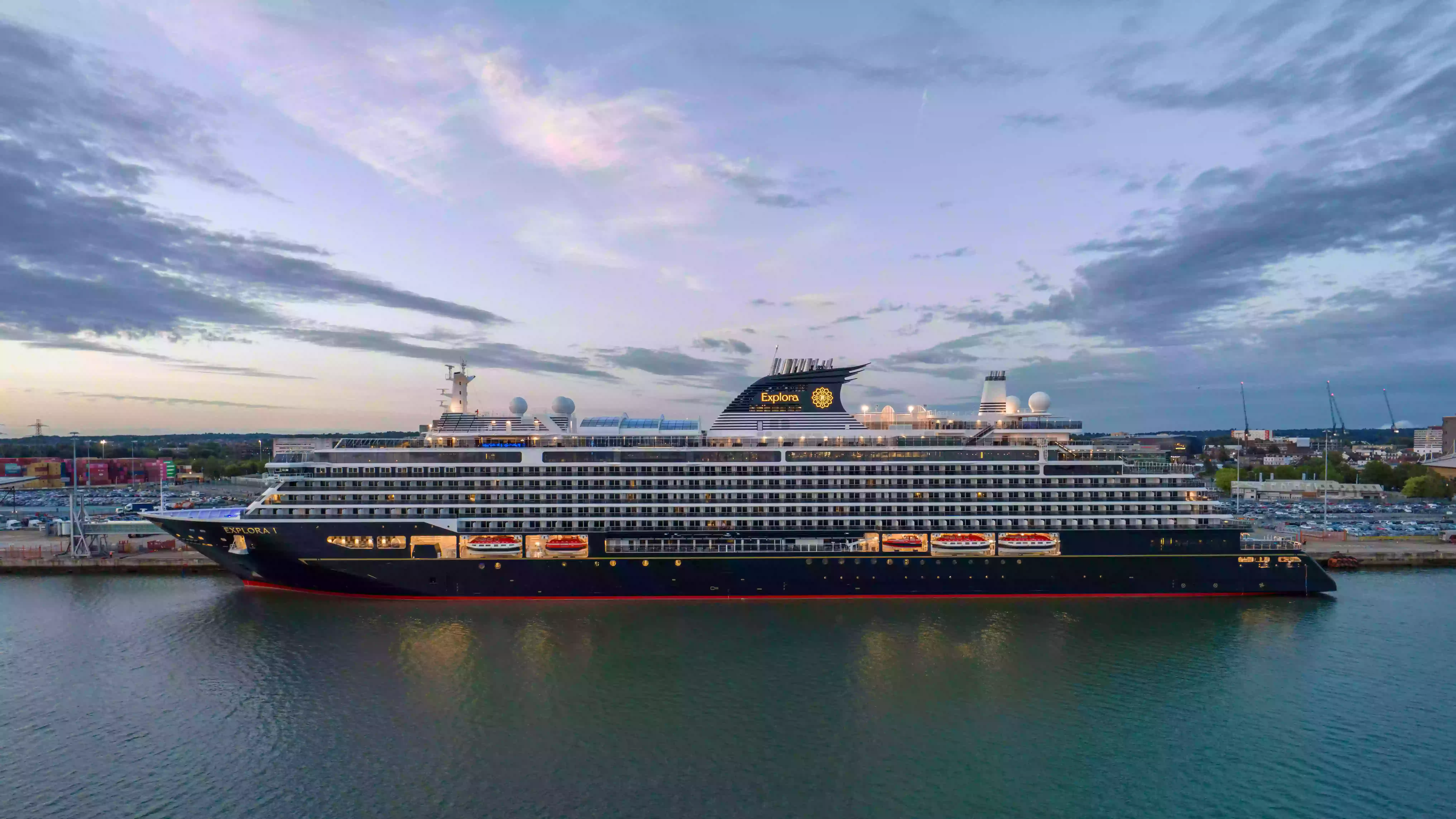
Two Operators, One Drone Shot: Flying the DJI Inspire 3
One person flies, one person films. Why a two-operator Inspire 3 crew gets shots a single pilot can't, and when it's worth the extra seat.
What dual-operator flying means
Two people, two controllers, one aircraft.
- The pilot flies. They own the aircraft: position, height, speed, the flight line, obstacles, battery and the airspace around it. They are the remote pilot in charge of the flight.
- The camera operator films. They control the gimbal and camera only: framing, pan, tilt, exposure and focus, from their own controller and screen.
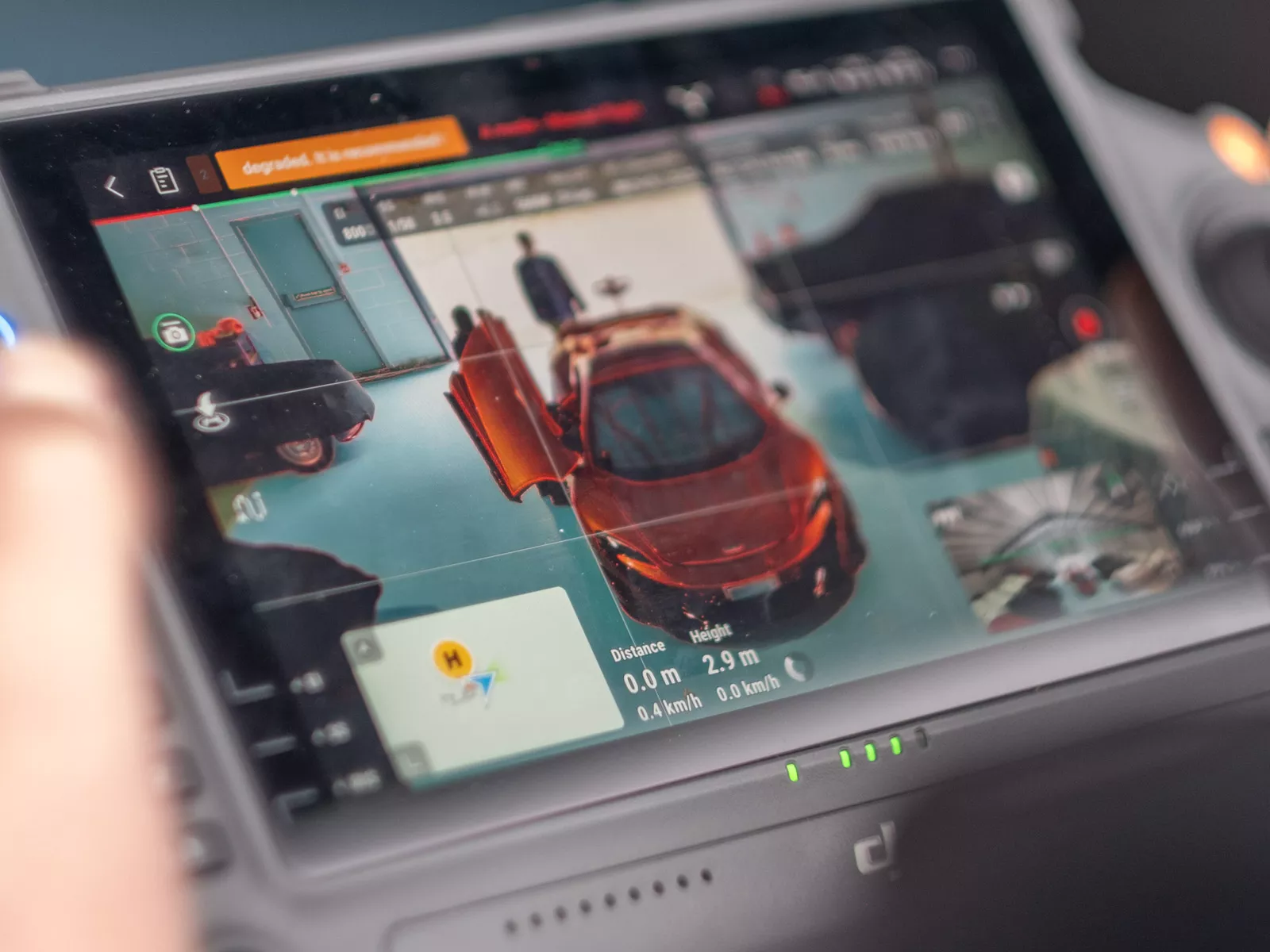
Each person sees a different picture. On the Inspire 3, the pilot flies from a separate forward-facing FPV camera, while the camera operator watches the main camera feed. When the camera swings round to follow a subject, the pilot's view stays pointing where the aircraft is going.
We regularly bring in a dedicated focus puller as a third crew member, either when the director of photography requires one or to open up more creative options. With focus handled separately, the camera operator can concentrate purely on the frame, and shallow depth of field and focus pulls in the air become practical.
Loading video…
What it changes on set
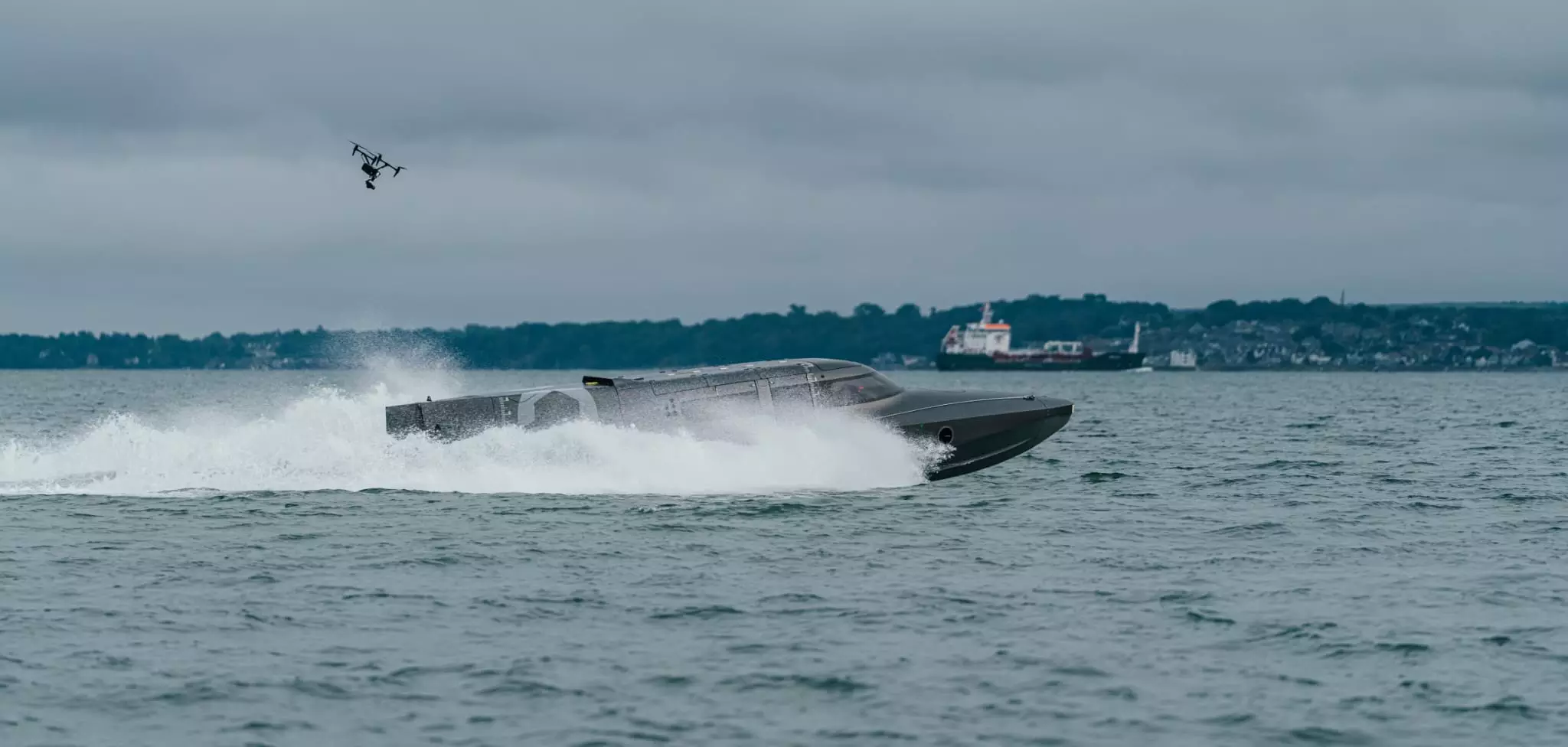
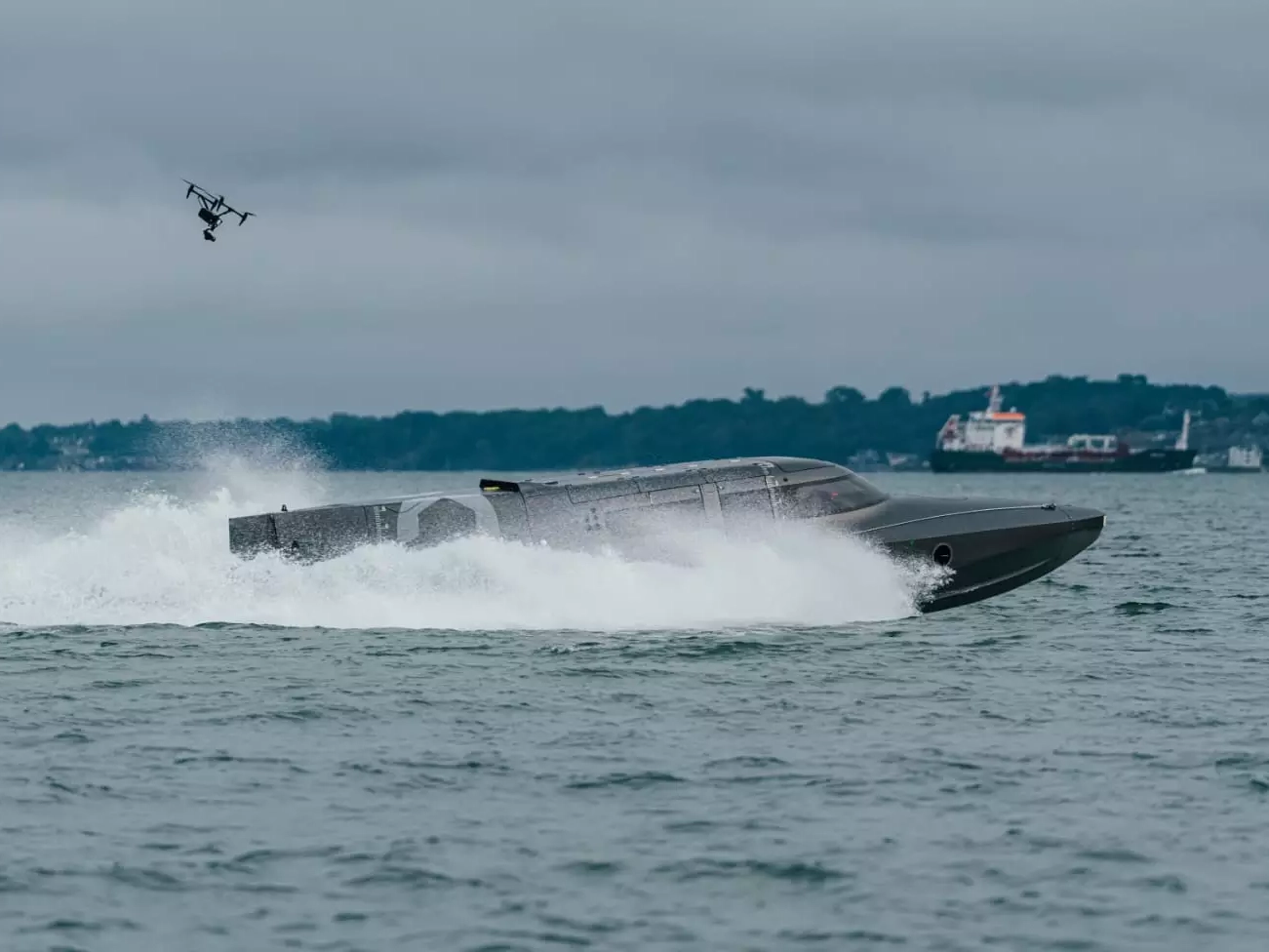
Moving subjects. The pilot holds a steady line alongside a vessel, vehicle or performer. The camera operator keeps the subject framed, and in 360-degree pan mode can rotate the camera fully round, independent of which way the aircraft is facing.
Combined moves. A rise that reveals a site while the camera tilts down and pans across. A fly-past that holds on the subject the whole way. Two sets of hands make these smooth; one set makes them a compromise.
Repeat takes. When a director asks for the same move again, the pilot repeats the flight line and the camera operator refines the framing. Each take gets closer, rather than different.
Safety. The pilot's attention never leaves the aircraft and the airspace. That matters most near people, structures, live port operations and other aircraft.
Clear communication. The director talks framing with the camera operator. The pilot talks positioning and safety. Nobody is trying to do both while flying, The pilot is in communication with the camera operator at all the time to ensure we achieve the desired shots.
Live monitoring. The camera feed can be output from the controller to a client monitor or video village, so the director sees the shot as it is flown. 1080p is our reliable baseline for a live feed.
Why the crew matters as much as the drone
Dual-operator flying only works when two people fly as one. The pilot has to anticipate where the camera operator wants the frame, and the camera operator has to know where the aircraft can and can't go. That understanding comes from hours flying together, not from the kit.
An inexperienced pairing can cost you the shot, or worse, compromise safety. When you book a dual-operator crew, ask how long they have been flying this way.
We have been flying dual operator since 2018, first on the Inspire 2 and now on the Inspire 3, which we have owned from new since its release in 2023. Investing in it was a no-brainer, because we value the creative options it opens up. We also have experience on heavy-lift shoots with the Freefly Alta X carrying larger cinema cameras. It shows in smoother moves, fewer retakes and a crew that stays calm when the light is going and the director wants one more take.
Why the Inspire 3
The Inspire 3 is DJI's cinema drone, built from the ground up for two-operator work. These are the features that matter on a shoot:
Feature | What it means on set |
|---|---|
Full-frame X9-8K Air camera | Up to 8K at 75fps in ProRes RAW, and full-frame 4K at 120fps for slow motion |
Dual native ISO | Clean images in low light, which is why it is our first choice for night work |
Interchangeable DL lenses (18-90mm) | We change focal length to keep a safe distance from people and still frame tightly |
360-degree pan or 80-degree tilt boost | Full rotation for orbiting moves, or extra upward tilt for low, looking-up shots |
Separate FPV camera for the pilot | The pilot's view stays independent of the camera operator's framing |
RTK positioning | Centimetre-level accuracy for precise, repeatable flight paths |
The footage also sits comfortably alongside ground cinema cameras. On our own productions it cuts with the RED footage we shoot on the ground, our clients shooting ARRI love it, and the colour pipeline supports professional grading workflows.
It's not a small drone, at just under 4kg, and flight times are shorter than a smaller drone's. We plan battery changes around the shot list, not the other way round.
Loading video…
Why not fly a smaller drone?
We regularly fly smaller drones too, and in skilled hands they can achieve complex moves, using up to five axis of movement. The Inspire 3 goes further in three ways. The camera moves independently of the aircraft, with a full 360-degree pan and extra upward tilt, opening up moves a fixed-heading drone can't make. A dedicated pilot and camera operator can repeat those moves take after take. And the full-frame sensor and RAW codecs give the grade far more to work with.
Lens choice matters too. We carry DJI's full range of DL prime lenses: 18mm, 24mm, 35mm, 50mm, 75mm and 90mm. When a project calls for a particular look, we can also custom fit vintage glass.
The image quality is where it really separates itself. It records up to 8K at 75fps in Apple ProRes RAW, or 8K in CinemaDNG, straight to DJI's PROSSD. For slow motion it shoots full-frame 4K at up to 120fps. With more than 14 stops of dynamic range and dual native EI of 800 and 4000, it holds detail in bright skies and deep shadows alike. Shooting in 8K for a 4K delivery also leaves room to reframe or stabilise in post, and the DJI Cinema Color System supports professional grading workflows such as ACES.
Fancy a chat about your shoot?
Not sure whether your project needs the Inspire 3, or what size crew it calls for? That's what we're here for. Tell us what you have in mind and we'll talk it through with you. No commitment, just a conversation with the people who'll be flying it.
When we recommend it, and when we don't
We recommend a dual-operator Inspire 3 crew for:
- Night and low-light filming, including live events and illuminated buildings
- Moving subjects: vessels, vehicles, motorsport and performers
- Commercials, broadcast and drama, where the aerials must cut with cinema camera footage
- Shots that need a tight frame from a safe distance, using a longer lens
- Complex choreographed moves that will be repeated across several takes
- Some clients simply require the best quality footage without stepping up to a heavy lift setup
It is not always the right tool. Inspections and surveys are better served by our smaller enterprise and survey drones. Long continuous event coverage suits the Mavic 4 Pro, which flies for longer. Interiors and tight spaces call for FPV, that's not to say we haven't flown the Inspire 3 indoors.
We can also fly the Inspire 3 single operator, and some jobs need nothing more. The best results, though, come from a full team: pilot, camera operator and, where the shots call for it, a focus puller. We will tell you honestly which setup your project needs.
Ways to book us
However your production is set up, we can slot in.
- Full crew - pilot, camera operator and a focus puller where needed, with our Inspire 3 and full lens kit.
- Pilot only - an experienced Inspire pilot to fly alongside your camera operator.
- Camera operator only - a drone camera operator to work the frame with your pilot.
- With or without kit - book us with our aircraft and lenses, or as crew on your own setup.
- White label - we work under your agency's or production company's brand, as part of your team.
Talk to our flight team
The Inspire 3 is the drone we reach for when the creative is ambitious. It gives a director of photography what they would expect from a ground camera: a full-frame sensor, real cinema lenses, proper colour and a dedicated operator on the frame. The aerials stop being cutaways and start carrying the story. If you have a shot in mind that a standard drone can't deliver, talk to us about the crew it needs.
The rules side
Two people on the controls does not mean two pilots in charge. One person is the remote pilot, and responsibility for the flight sits with them throughout.
The Inspire 3 carries an EU C3 class mark, which the UK recognises as the equivalent UK3 class until the end of 2027. In the Open Category, that restricts it to flying well away from people and built-up areas. That rules out most real-world shoots.
We fly it under our CAA Operational Authorisation in the Specific category (PDRA01), backed by a site-specific risk assessment for every job. That is what lets us work closer to people and buildings than the Open Category allows, while keeping separation from crowds and assemblies at all times.
Sites near airfields, in controlled airspace or inside port limits need extra permissions, arranged in advance. We handle that paperwork, and we carry £10m of insurance on every flight.
Common questions
Do I have to book two operators for the Inspire 3?
No. We can fly it single operator, but the best results come with a team. We recommend a camera operator when the shots involve moving subjects, combined moves or a director who wants to work the frame live, and a focus puller when the director of photography requires one or the creative calls for it.
Can you send a live feed to our monitors?
Yes. The camera feed is output from the controller and can be wired into your video village, so the director sees the shot as it is flown.
Can it fly at night?
Yes. Its low-light performance makes it our first choice for night work. Night flights are planned, lit and risk assessed in line with CAA requirements.